
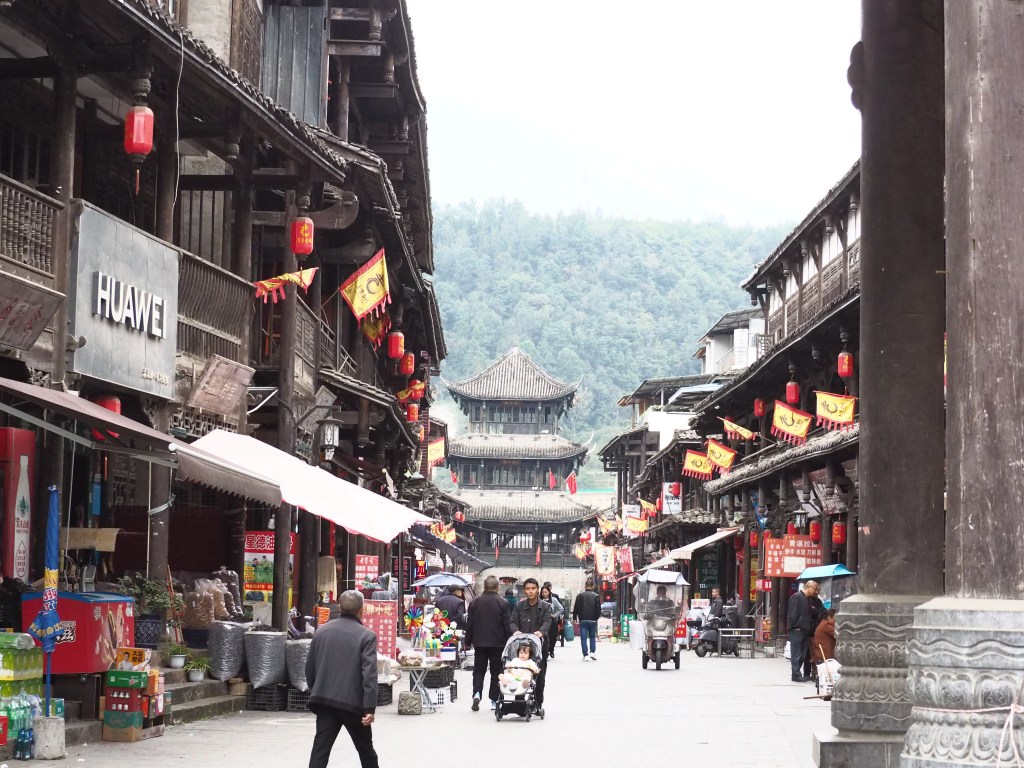
In 2005, a friend and I spent just shy of a month wandering across southern China. From Hong Kong to Lijiang, we bounced on overnight buses and multi-day trains through lush farmland and sprawling cities. We sought a version of China not found in western media. And we earned this by collecting stomach aches, sleeping like contortionists, and walking miles across foreign earth. It was our second stop (after Japan) on a 6-month journey through Asia, the Pacific and South America. Our bags were spartan, carrying clothes, a few toiletries, one camera, sleeping bags, a tent, and 20 pounds of guidebooks. With a $30 dollar-a-day budget, it was a full-on shoestring affair.
After landing in Hong Kong, we plunged into the city like sailors on leave. We tipped tall bottles of beer, ate heaping plates of pork and chive dumplings and rode outdoor escalators like they were theme park rides. Then we shot off for Guangzhou, the capital of the Cantonese Province, where the backhand of mainland China met our cheeks. The language barrier between English and Cantonese seemed impenetrable. We fumbled with directions, got lost in taxis and were barked at by impatient train-ticket agents. Every decision we made sent us headlong into some logistical pickle. It was real travel: punchy, unpredictable and honest. I loved it.
From Guangzhou, we speared west for the limestone karsts of Guilin and Yangzhou. Here, we picked up and Aussie traveler named Erin while downing bottles of booze on a hostel terrace. She’d studied Mandarin in college and spoke it fluently. Fortunately, she took a shine to our travel style and joined us for the next two weeks. From that point on, the three of us plunged into the depths of Yunnan together, drunk on life and hungry for new encounters.
Erin was a godsend. On our own, we were mute, relying on hand-gestures alone for food, rides and accommodations. Struggling like hell is part of a fine travel experience, but language barriers, in some places, act like cultural blockades. But with a Mandarin-speaking foreigner, we managed to breach cultural walls with ease. Locals loved her and stopped to talk. Angry ticket-agents smiled and joked when she requested our seats. Restaurant staff were playful and recommended dishes that we should try. Our bellies stayed full and our lips wet with beer.
At that time, China was another planet to young westerners like us. Markets were filled with odd-looking fish, buckets of frogs, caged rabbits, and sea creatures of every shape. Tanned faces toiled under large sacks of onions and cabbage. Baskets of potatoes curled the backs of old women as they walked in from the fields. Commerce was king and the air buzzed with ungrounded electricity.
But trash was everywhere. People threw bottles out windows, filling gutters and sidewalks with refuse. Sewage from train car toilets emptied onto the tracks in the countryside. This happened often just steps away from farmers working their fields. Everywhere we went, people spit large oyster-like goobers on sidewalks and floors. Men smoked in restaurants, trains, taxis and bathrooms. Industrial cities were choked with smog. Toilets were often separated only by open knee walls with no doors or shades to block your private doings. Walking into a public bathroom in western China meant encountering an open row of squat toilets sans toilet paper, where men walked by and stared between your legs. How easily it would have been to simply reach down and tip over a foreigner with a light push against the forehead.
While in Lijiang (an historic old city in Yunnan), we watched a mother walk out of her shop, line a section of sidewalk with newspaper and urge her 5-year-old to complete a bowel movement on the street. When the girl was finished, the mother crumpled up the newspaper, walked to a nearby stream and tossed the package into the water.
China in 2005 was raw sensory stimulus. It ripped the blinders from our eyes and told us the story of an ancient culture that was still emerging from years of isolation and hardship. By cultural standards, it was rich. But by economic standards, it was a developing nation. It had a nascent middle class and was still jockeying for its position on the world’s stage. And now, as I sit in Beijing 19 years later, I can’t believe I’m in the same country. This was the China I traveled through? How much can one nation change in just two decades?
Read next week for Part II.


 Stirring Point
Leave a reply to John Holahan Cancel reply