
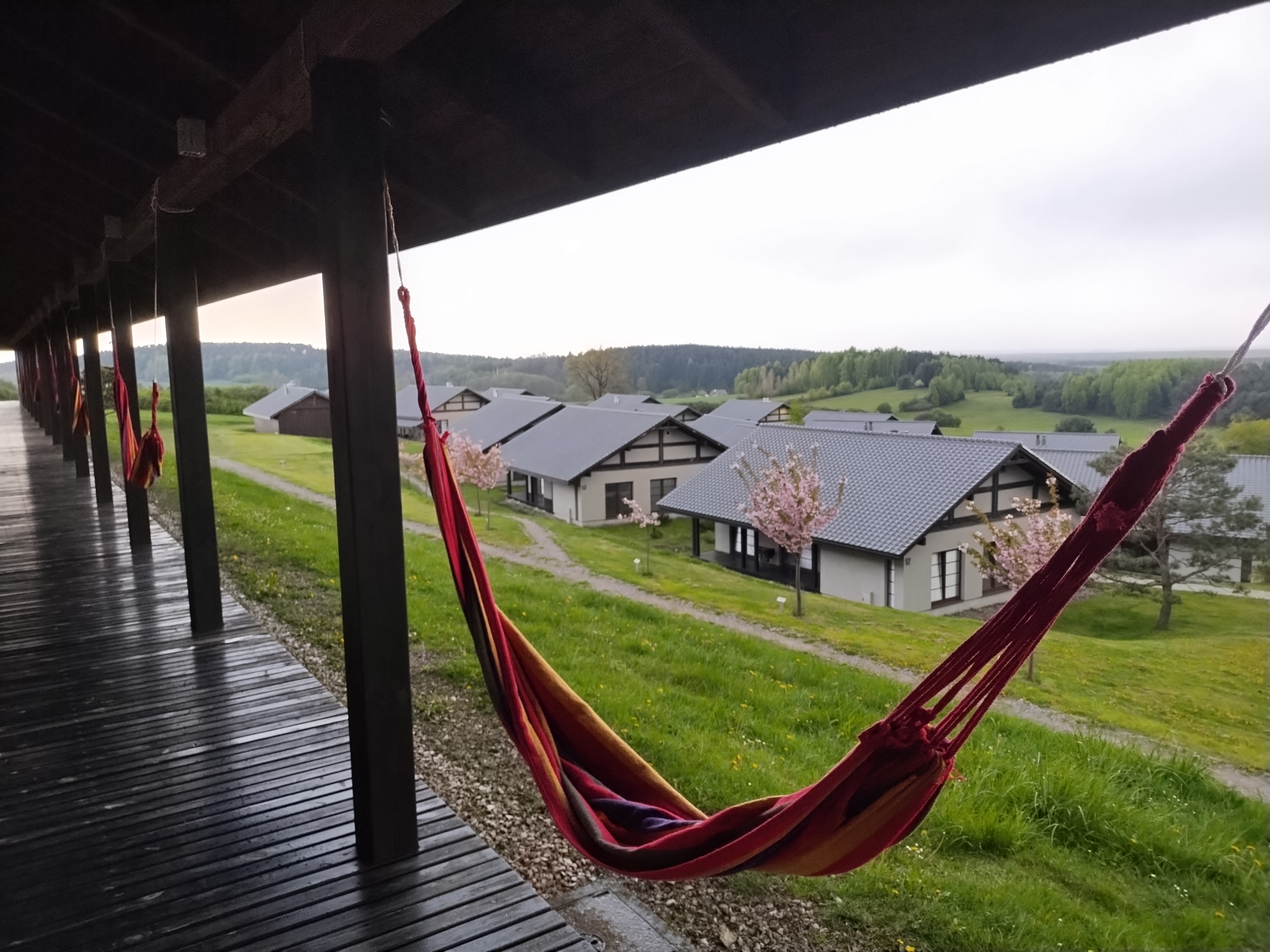
Along a winding dirt road in the Polish countryside rests a model Japanese village. Its wooden bridges connect manicured pathways, while its pools reflect images of clouds as they dance across the sky. A stream trickles below the bridges and feeds into the mouth of a man-made pond. Tadpoles wiggle their tails like rudders near the bottom of the pond, filling the space around my feet. I take a deep breath and plunge below the surface. Whoosh! The frigid water presses against my forehead and commandeers my chemical switchboard. Cortisol dumps. Dopamine floods. Soon, a wave of serotonin will wash over me. Whoosh! My head emerges and a rush of cool, spring air fills my lungs. Inhale…exhale. I look around and see the tired bodies of Germans, Dutch, Danes, and Australians bobbing nearby. They all wear the same expression as they soak: rejuvenation.
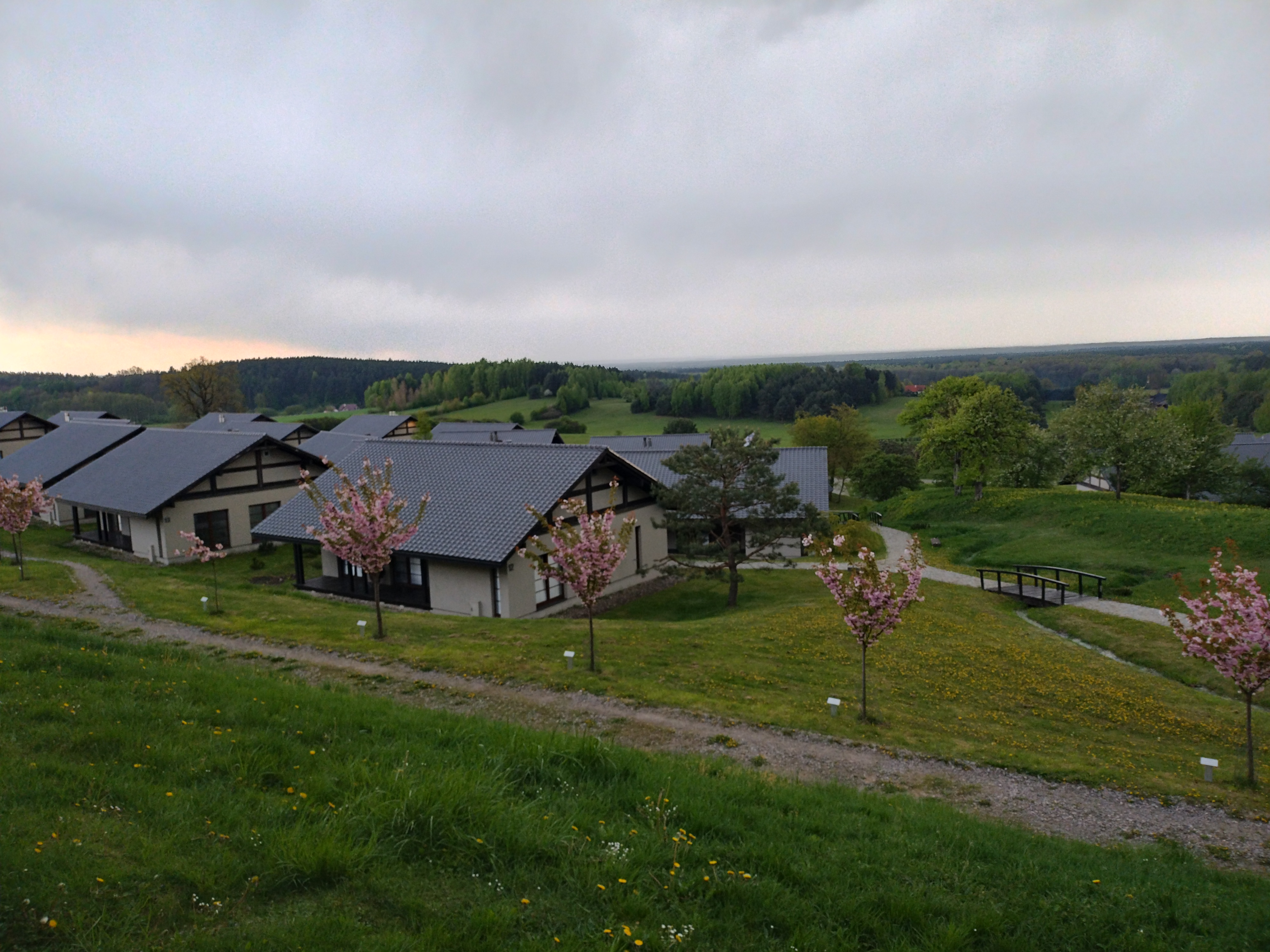
A hundred Brazilian Jiu-Jitsu fiends have converged on Dojo Stara Wies in central Poland for a week of training. The dojo is a joint project between the Polish and Japanese governments and manages to blend into the landscape as if Poland were somehow built around it. Each building is capped in dark, curved tile that overlaps each piece like the shell of an armadillo. Wooden doorways compliment the hardscaping and balance the traditional aesthetic. The gardens and cobbled walkways all end at viewpoints exuding peace and contemplation. The only disorder is the chaos the traveler brings pinched between their own two ears.
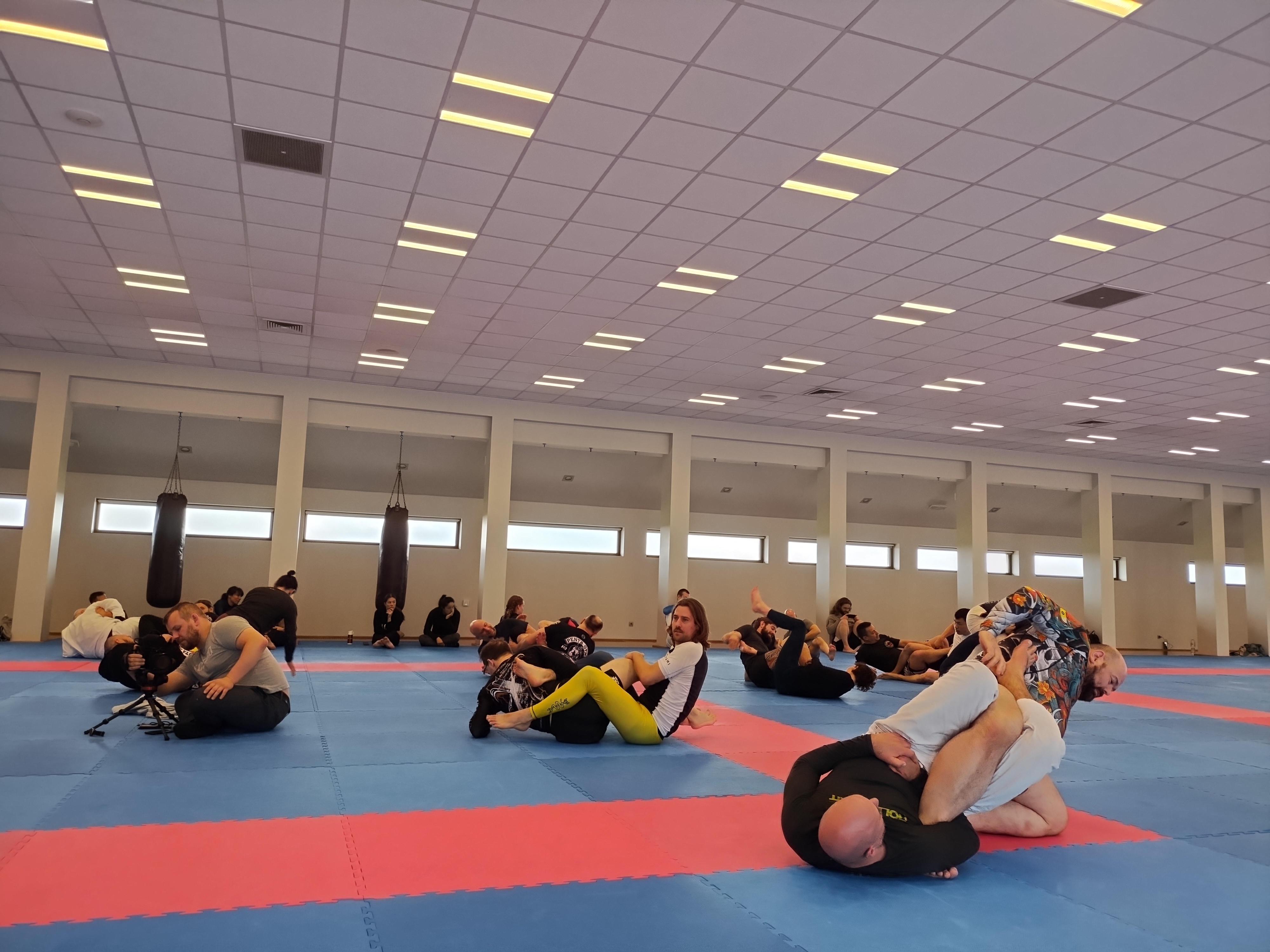
We take meals together, share in sauna rituals, plunge into the cold pond, and train side-by-side. Inventive instructors travel from Estonia, the U.S., St. Barthelemy and Germany to share techniques and strategies to employ in our jiu-jitsu practice. They use terms like “an ecological approach” and “choke theory,” while we listen as if we’re studying for an exam. They sideline our sport’s brutality to feed us academic theories on defending and attacking from varied positions. What techniques are we learning? Control and manipulation: targeting joints and closing off arteries that flow to the brain.
Our shared houses allow us to regroup and heal our worn bodies from the day’s effort. We sit around squat Japanese tables with our legs crossed on tatami mats, resting from our work. The fireplace roars as we sip shooters of sake and slug from bottles of local beer. Germans drink with Australians; Americans drink with the Welsh. Here, sport functions as the unifier of men. We tell stories, crack jokes, and plot our approach for tomorrow’s lessons.
When morning arrives, we gobble up eggs and cottage cheese. We slather rye bread with butter and stack cold cuts on top. We slurp coffee and tea, wipe our mouths, and head off to grab our gear. We change quickly and make a beeline for morning yoga, where our stiff bodies unravel like copper wiring. Hips crack, shoulders ache and necks work to realign. We bend forward in search of our toes while our hamstrings tug against the backs of our legs. Rising to mountain pose allows us to look past the instructor and gaze into a wide, pastoral expanse. When the hour ends, the next session starts immediately, converting our calm into combat mode. We simulate attacking each other’s legs or fighting for inside positions. We battle for straight ankle locks or spend an hour exploring the nuance of the cross-collar choke. Our rough cotton gis drag across each other’s cheekbones until we perfect the choke. Everyone leaves the room raw and down a layer of skin.
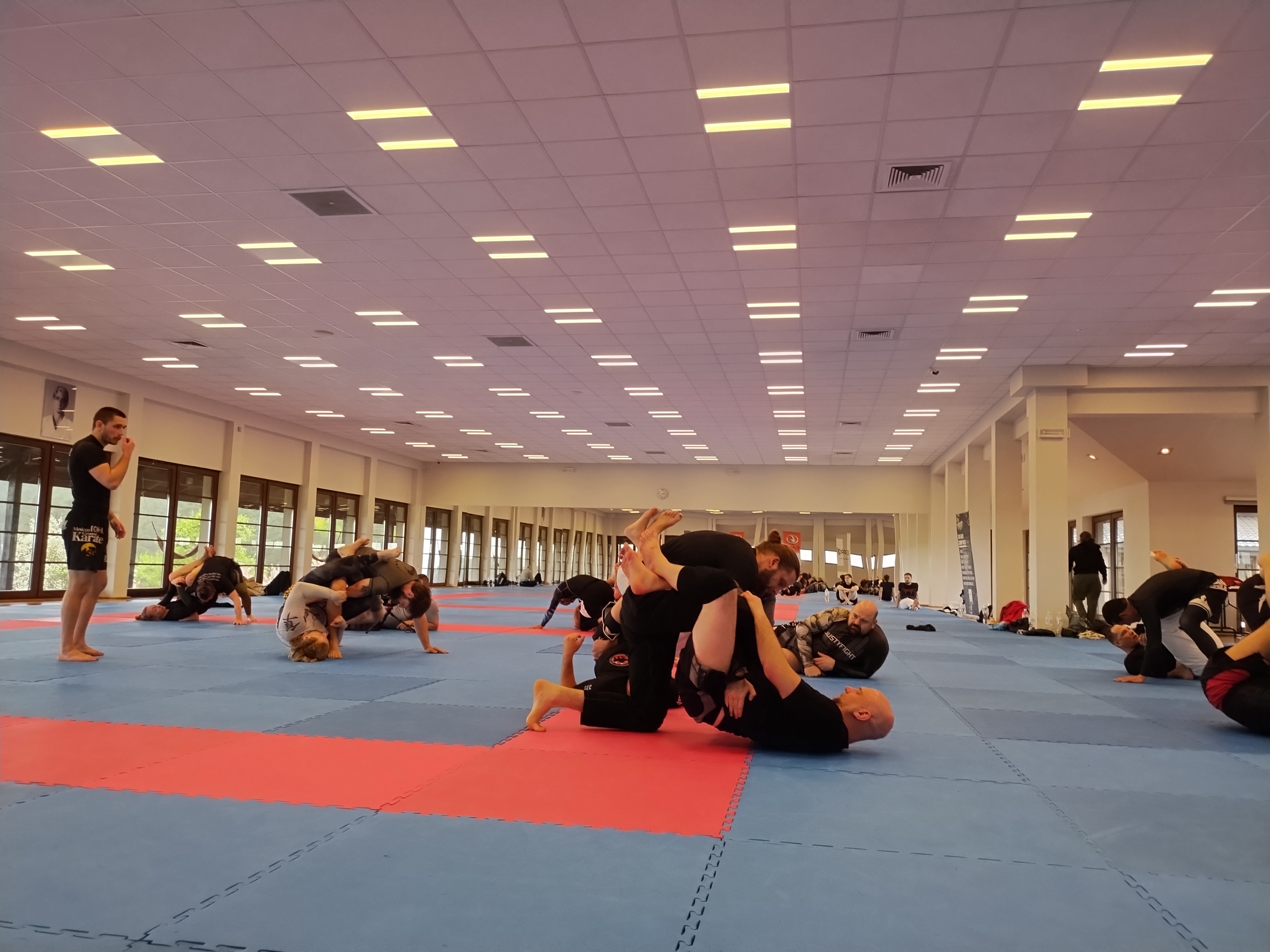
Our days are a mixture of learning and sparring. From smothers to armbars and chokes to leglocks, we practice the art of attrition. Jiu-jitsu, at times, allows us to catch our opponent with a sneaky submission. For practiced players, though, strategy and the right reactions eventually grind the opponent down and leave them a chewed-up mess.
Our training pushes us all to our own unique edges. We pressure pass, judo throw and fight to strangle each other round-after-round. Some players tweak a knee; others pinch a shoulder. I blow out a pinky toe sideways in a 90-degree dislocation. I push the toe in and out of place like I’m toppling a domino. The pain arrives when the adrenaline wears off, so I stuff a few Advil in my mouth. A day’s rest and a roll of tape allow me to get back on the mats and train once more before it’s time to leave.
Over dinners of soup and pasta, we talk about life, children, work and jiu-jitsu. Where do you train in Perth? How’s your gym in Sweden? Where else have you traveled and trained?
As fast as it comes, it disappears just as quickly. We say our goodbyes the night prior and trickle back into the world on a blustery Sunday morning. As if betrayed by time, I find myself standing at a train station, wondering what happened to my week. When the train pulls in, I brush the snow from my shoulders and step into the car. I hoist my bag on the luggage rack and sit by a large picture window. The countryside whips past as we barrel toward Warsaw, giving me time to reflect on a life lived in motion. The stone of my body is slowing, and soon it will begin gathering moss. Until then, I’ll roll on.




Leave a comment