

When I thought about Lithuania, only a few images sprang to mind. I imagined rolling hills of greenery and rural settings. I imagined glimpses of forests where trees leaned against the edges of potato fields. I saw old women walking along the roadside, hunched at the back, tired from shouldering sacks of onions. When thinking about Vilnius, the capital, I built an image of old Europe, battered by the weight of post-Soviet history. The violent shade of the Iron Curtain told me the city must be deprived of sun and starved of vital nutrients. I knew there’d been progress. I knew it held beauty. But all my visions prior to my arrival were baseless forecasts. Frankly, I had no idea what to expect.
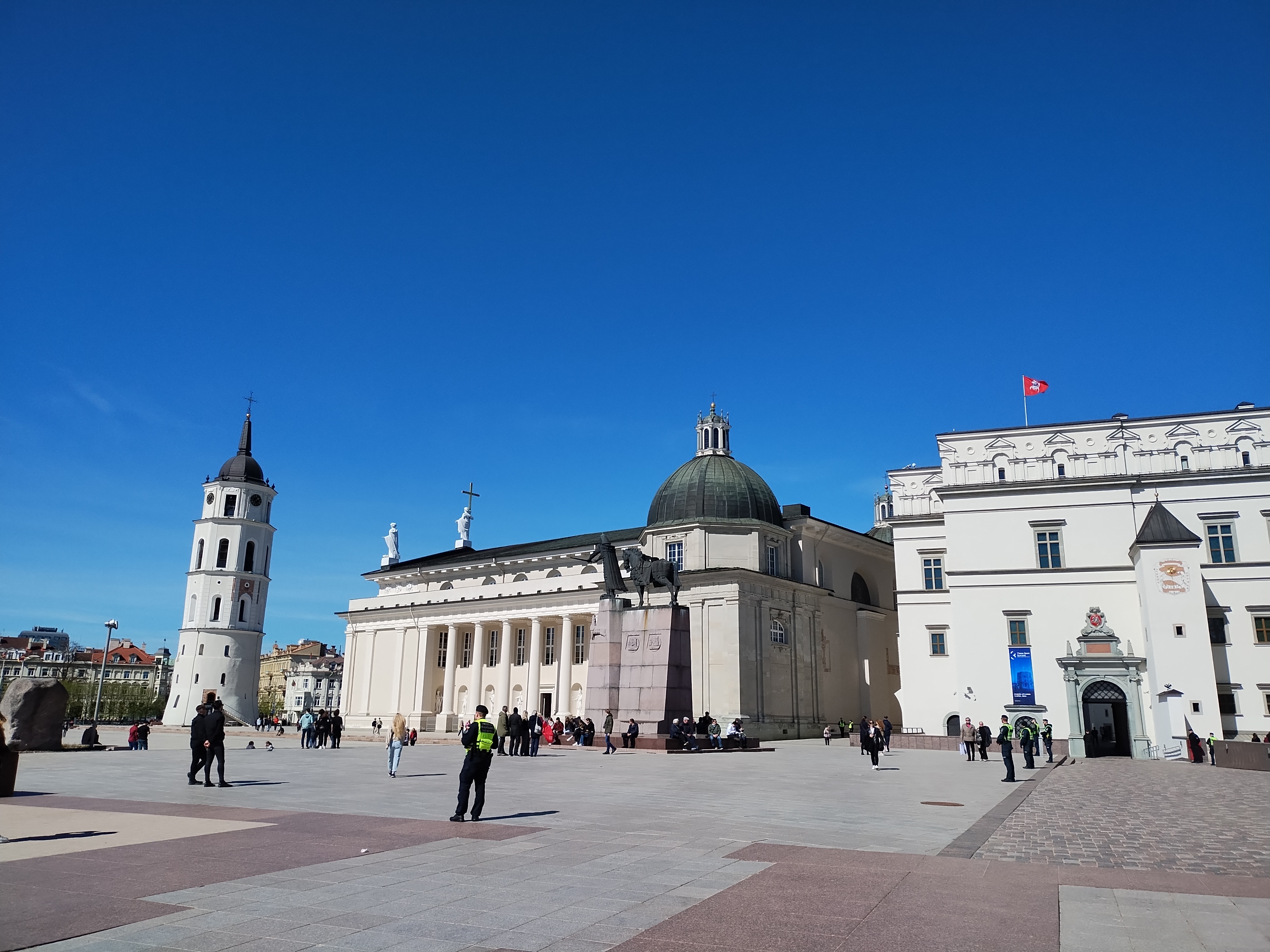
A picture may be worth a thousand words, but it’s unable to communicate the “essence” and “feel” that a place comes to embody. Online images show wooden bridges linking charming neighborhoods in Vilnius. Travel websites speak of artist collectives and historic churches. But do they ever get to the heart of it? Will this piece I’ve written give any sense of what it’s really like? Second-hand descriptions always fail our senses. Our noses, eyes and tastebuds capture the world with such immediacy, and anything less, whether we like it or not, is an imitation. This point is emphasized in a passage of speech given by Robin William’s character in the film Good Will Hunting:
“So if I asked you about art, you’d probably give me the skinny on every art book ever written. Michelangelo, you know a lot about him. Life’s work, political aspirations, him and the pope, sexual orientations—the whole works, right? But I’ll bet you can’t tell me what it smells like in the Sistine Chapel. You’ve never actually stood there and looked up at that beautiful ceiling; seen that.”

For me, Vilnius sprang from the earth like a tulip in spring. With its food halls, chic cafes, graffiti, and storied cathedrals, the city is an epicenter of a rapidly advancing society. Sophistication and creativity collide with the remnants of the occupied past and bulldog their way through any PTSD. They are modern; they are driven, and they are racing toward the future.
We based ourselves in the Uzupis neighborhood, an independent republic set along the banks of the Vilnia River. On April 1st, 1998 (April Fool’s Day), the neighborhood established and ratified its own constitution. Its 11-man army promised to protect its boundaries (they have all since been retired) and while it has no embassies abroad or within Lithuania, it is technically its own republic. The whole thing may be tongue-in-cheek, yet even so, the quirky history stacks more charm atop a neighborhood already bursting with character. Inviting storefronts beckon local shoppers. Windows and doorways wear an artsy patina. Bakeries, second-hand book shops and Michelin-starred restaurants line the ageing sidewalks. The main square—filled with open-air cafes and the famed Angel of Uzupis statue—pumps a sort of cultural blood through its arterial streets. Walking Uzupis slows the pulse and shifts the purpose of one’s step. Sipping espresso at Cafe 1 or buying seeded crackers from Kmynine Biržų Duona Bakery slows everything down.
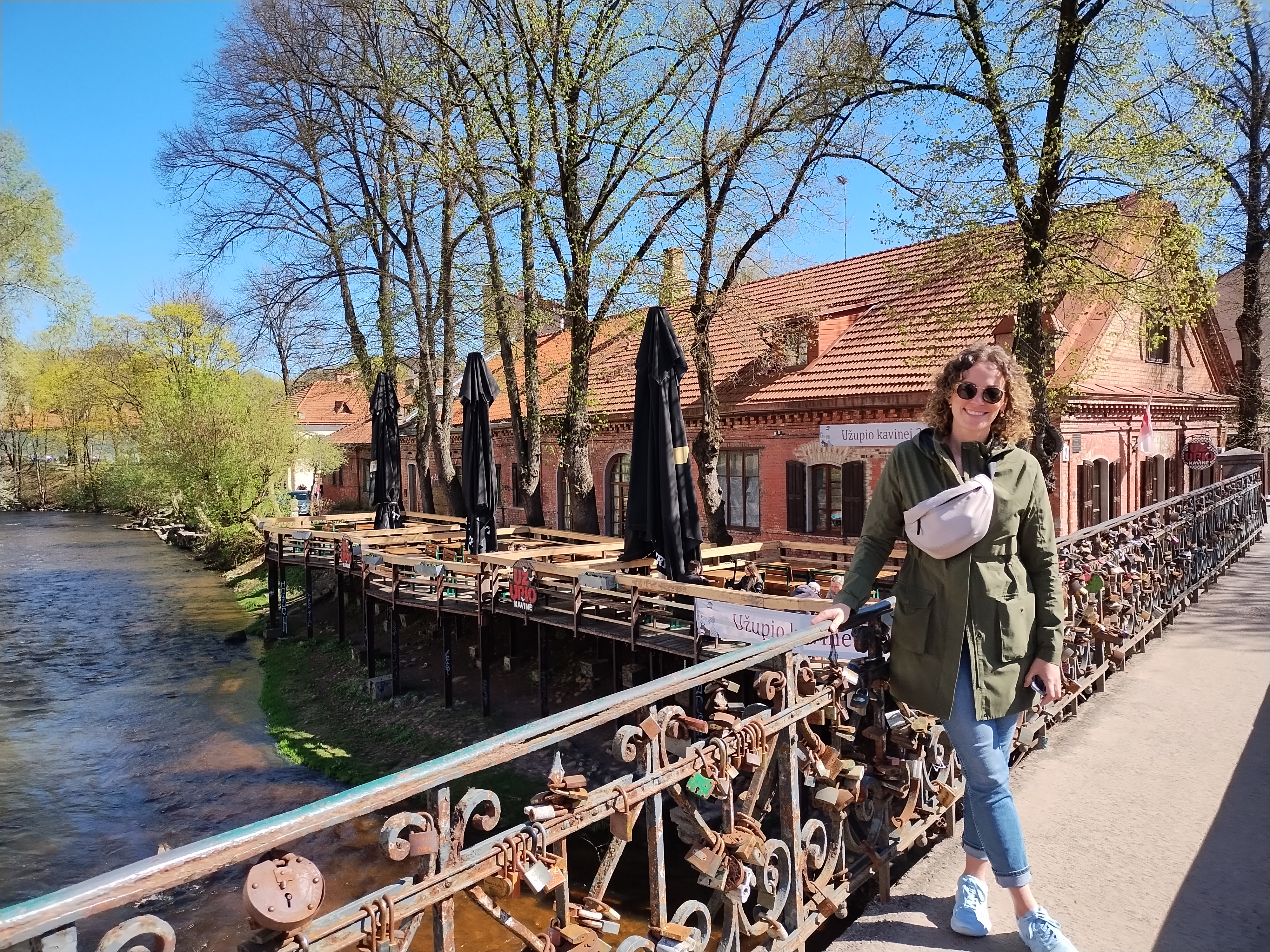
Wooden bridges span the gurgling Vilnia River below. Vilnius Old Town invites pedestrians to inspect its alleyways, vintage clothing stores and artisan shops. The Church of St. Nicholas, Vilnius Cathedral and St. Anne’s Church decorate the skyline with ornate turrets and weathered bell towers. Gilded clocks and old picture frames crowd antique store display cases. Gendiminas Castle Tower stands sentry over the city and tells a story of time passed. Esplanades buoyed by lux cafes and cream-white buildings invite lovers to reach for their partner’s hand. The Neris River rinses away the feel of modernity, compelling one to lose themselves in nature’s soothing balm.
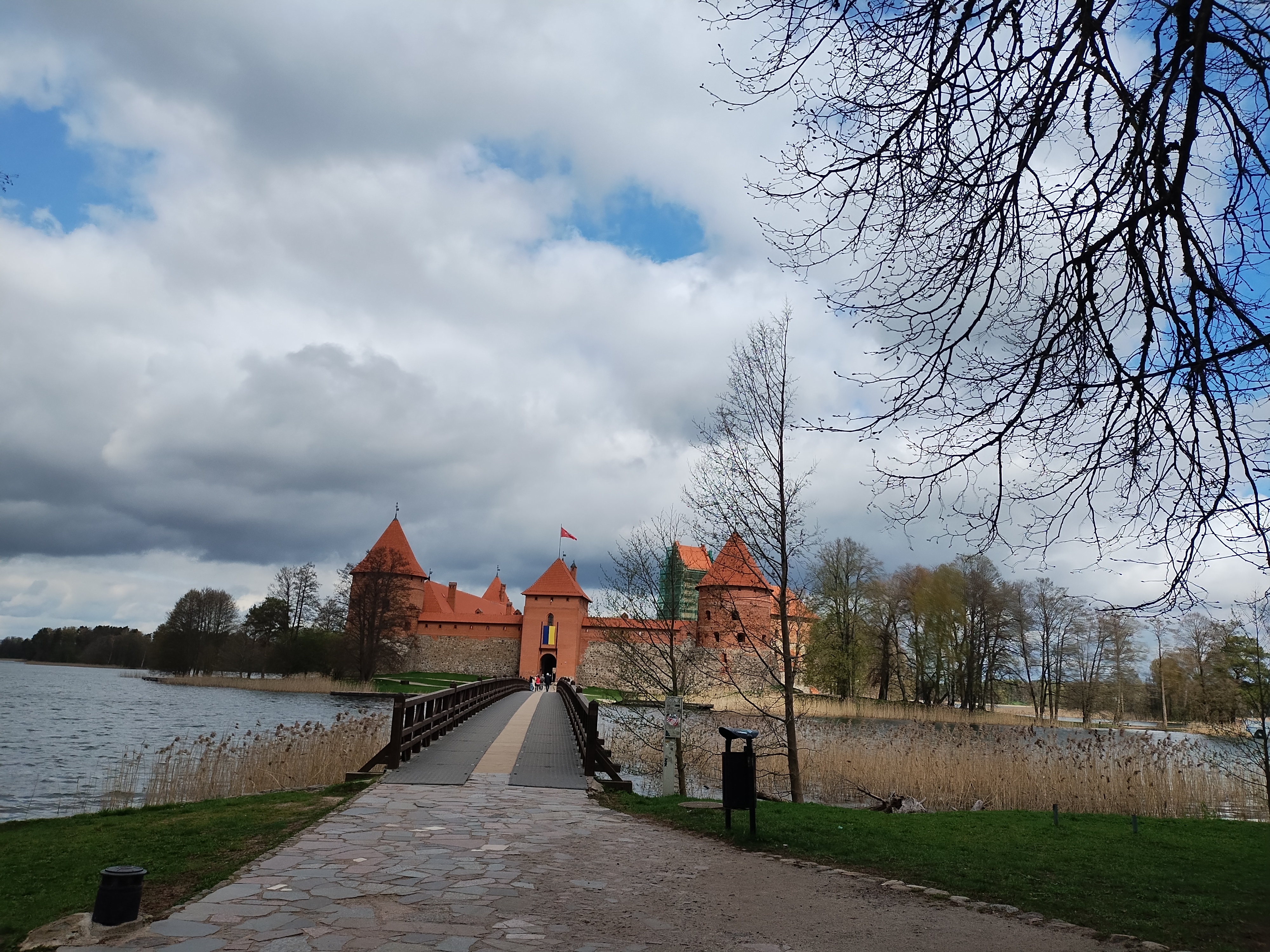
At the suggestion of a colleague (who happens to be from Lithuania), we took a day trip to Trakai Island Castle, 40 minutes southwest of Vilnius. The brick-and-stone structure, built on an island within the bounds of a picturesque lake, dates back to the 14th century. A long, wooden bridge connects the island to the mainland and adds warmth to the fairytale setting. After centuries of prosperity, Trakai was abandoned for the riches of Vilnius until a few astute archeologists championed its cultural significance. Until that point, the castle primarily served as a resource yard where poor locals would loot building materials. Over time, a few bricks here and a few bricks there reduced the castle to ruins. The property is still being restored today.
Circling back to Uzupis leads us to Bernardine Cemetery, located just above a portion of the Vilnia River. Mausoleums and tombstones dating back to the 19th century rest side-by-side in neatly arranged rows. Lush grasses and purple wildflowers covered the earth like a blanket for the dead. Thin footpaths, carved by the feet of the grieving, wove through headstones and century-old markers like serpents on the prowl.
Why was Vilnius so captivating? Was it my ignorance that somehow cast the region in an enigmatic light? Or the constant surprise of how the urban and natural landscapes were so effortlessly interwoven? Was it the attention to detail in its churches? Or the way the grandeur of the skyline sang without ostentation? To be honest, I am not sure. I arrived with an illusory vision, a flimsy projection assembled from what I imagined I might see. And now, the smells, the feel and the flavors of the city are trapped in my memory, and I’m hungry for more.


 Stirring Point
Leave a comment