

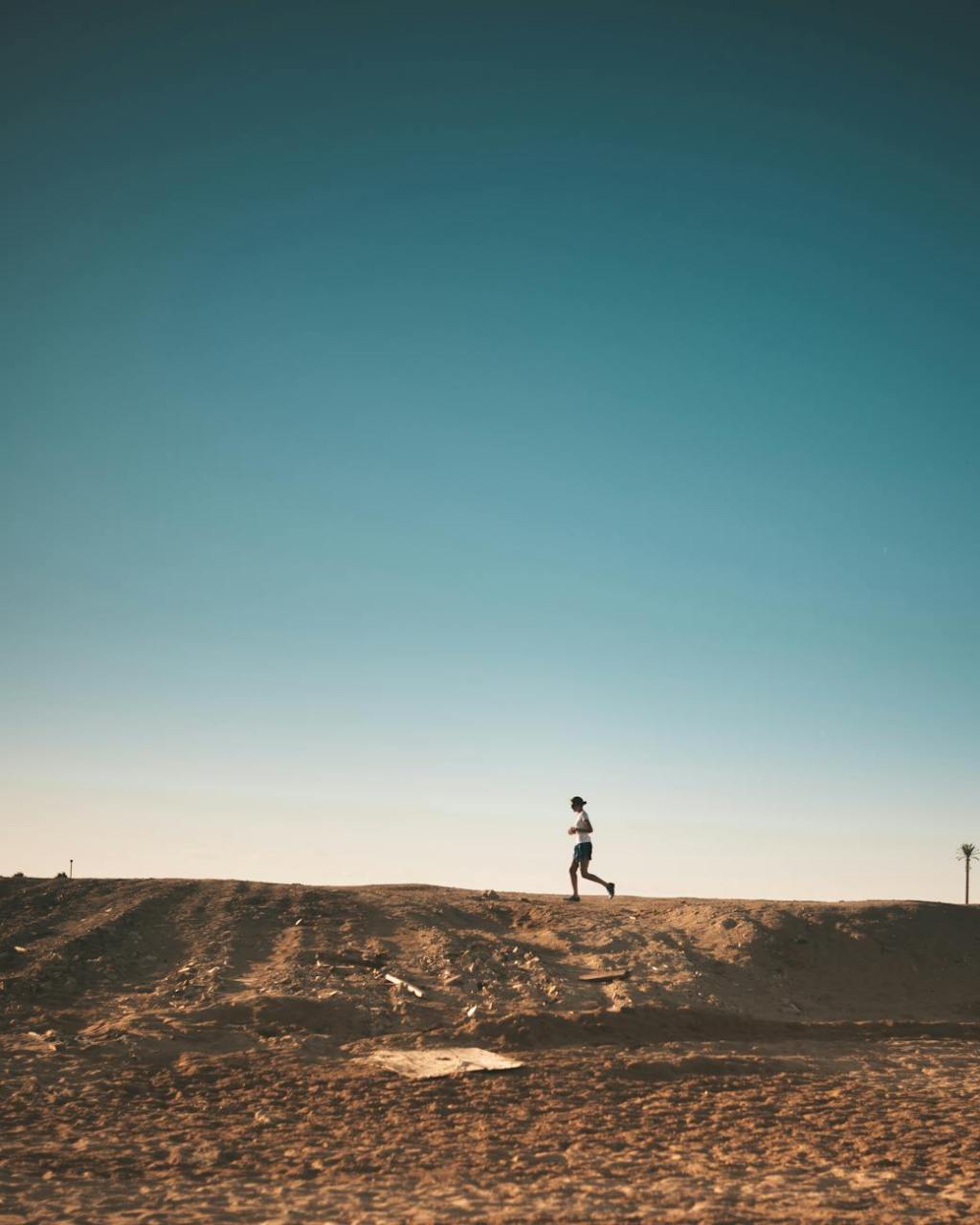
On a brisk evening in October 2022, I took a long run through my Denver neighborhood, listening to nothing more than my labored breathing and some wandering thoughts. Elizabeth Gilbert, the best-selling author of Eat, Pray, Love, was fresh on my mind after I’d just devoured her book Big Magic—an insightful self-help text on harnessing our creativity. To clarify, my life was filled with fortune: a healthy body, a loving family, and loyal friends. I kept a solid job with a great company through the worst period the travel industry has ever seen, and the tide of COVID-19 was finally receding to a low hum in the background. But things felt off. The pandemic had run me ragged at work. I was burned out, worn down, and unsure of my professional trajectory. My days landed as if they were crashing dominoes, tumbling and falling one into the next. I constantly confused motion with action, failing to notice how acts of considerable effort—in my work, my exercise—rarely brought me any peace. Most days felt like I was doing little more than biding my time between holidays and events. I knew this place; I’d been here before.
I needed a change. But normal pivots like changing jobs, moving cities, and chasing greener grasses felt like fruitless cop-outs. They failed to reach the root of my problem. What the hell was my problem, anyway?
That run changed my life. As I turned corners, crossed streets and lept over uneven pavement, a dim light of awareness began creeping in. I spotted an asymmetry in my perspective and how I alone was the common denominator in all of my problems. This required a fundamental change. But I needed more than just “a” change; I needed “to” change. The shift had to be absolute.
I began thinking about the cold reality of 2020, when we were all locked in our homes, siloed away in our towers of fear. I thought about the limping enthusiasm we all embraced in 2021 and the promises of future adventures that began populating people’s minds. “When we emerge from this pandemic, I’m going to…” I made these promises too, but I failed miserably in their execution. I swore I’d refuse to take my liberty for granted, yet when the shackles were unlocked, it was as if I’d forgotten how to move.
And then, mid-run, it hit me square in the chest. I’d promised myself I’d start writing more, but I failed. I’d promised myself I’d start traveling again, but I’d done little. And I promised myself I’d dedicate time to improving my Jiu Jitsu practice, but beyond showing up and training, I was only partially engaged. These things brought meaning and joy to my life. Yet I failed to thrust myself into all three and came up empty-handed. Most importantly, I promised myself I would no longer live under the shadow of my own doubts, or I’d do my utmost not to. And that’s when the idea landed: what if I could find a way to combine my love for writing, my penchant for travel and my passion for Jiu Jitsu, all while taking a few months to inwardly reflect and focus on what’s most important to me in life?
I spent the next few weeks building a plan and clutching the idea by its tail. I dreamt of where the journey would take me and the people I’d encounter. I considered the hardships I’d face walking into rustic gyms in foreign lands with young athletes eager to take a bite out of the new guy. I thought deeply about what I needed most in my life and what it would take to find it. And what I needed was a clearer picture of my mind’s behavior and patterns of thought. I also needed to run my ego through the meat grinder—a great exercise for stripping away much of the bullshit we tell ourselves.
I went to my company and worked out an agreement for three months of unpaid leave. I connected with random strangers across North and East Africa, as well as Central Asia, in search of contacts to anchor each visit. I studied regional geography and politics to ensure I had some idea of what I’d be walking into. I chose destinations where I’d be forced to awaken from my slumber—where abrasion was all but guaranteed.
8 months later, I packed a duffle bag with two travel gis, a few changes of clothes, my dopp kit and my computer. After two flights and 20+ hours of travel, I touched down in Morocco, training first in Rabat, then grappling in Tangiers. I hiked the Atlas Mountains outside of Marrakech, surfed the Atlantic near Taghazout and wandered alleys in Casablanca under the cool July night. I caught a flight to Algeria, by way of Rome, and touched down exhausted and clueless in one of the least visited countries on the planet. I trained with warriors in open-air gyms, wrested with MMA fighters and faced an endless parade of tough sons-of-bitches. I spent 10 minutes on Algerian national television doing interviews about my journey while a film crew recorded our training. A few weeks later, I crossed a remote border on foot into neighboring Tunisia and hitchhiked through a portion of the Sahara Desert. I traveled north to Tunis, put in double sessions with a dedicated group of grapplers and caught a staph infection on my face. I walked the ruins of Carthage, discussed the dismal state of national politics with locals, swam in the warm waters of the Mediterranean Sea and partied with new friends in lush beachside clubs. I caught a flight from Tunis to Addis Ababa, Ethiopia, and for 16 days, I was forced to stay in the capital. Conflict threatened much of the country and with nowhere beyond the city to go, I walked its cobblestone streets and winding alleyways. I trained most days with a local team, earning a set of stitches in my chin for the effort.
I left Africa after 2.5 months, traveling east to Pakistan by way of Dubai. I trained with new friends in Islamabad and Lahore and traveled to Karachi to interview one of the country’s only blackbelts. I walked miles in Karachi, from its oil-tinted beaches to its opulent, high-walled compounds. And to drop a cherry on top, I traveled by car from Islamabad to the Hunza Valley in northern Pakistan to explore the jagged peaks of the Karakoram Highway. After three months of somewhat grueling travel, I stood with my toes along the Chinese border in a far northeastern pocket of Pakistan, knowing every moment of the journey, every chance I’d taken, every black eye I’d collected and every penny I’d spent was worth it. I was living.
I met brothers along the way, spilling our sweat and blood together on the mats. These people protected me, supported me and brought me closer to their worlds. To them, I’m forever grateful.
And when I returned home from this adventure, my work allowed me the chance to jump on a journey to Nepal and Bhutan just three weeks later. I revisited Kathmandu for the first time in 13 years and spent a week traversing the beauty of Bhutan’s towns and countryside. Each step in Bhutan allowed me to capture a traveler’s dream and for a brief moment, hold it in the palm of my hand.
I watched my best friend get married in 2023 and stood with him at the altar. I saw my niece and my nephews grow in character and skill. I watched my family flourish in pursuit of their goals. My girlfriend and I lost our precious dog, Hershel, but I’ve watched our resilience as a couple grow as we navigate the healing process.
Our minds are often the true cause and solution to most of our problems. At times, life is an unimaginable asteroid field of inevitable conflicts, pounding and pummeling us from countless angles. Wars, disease, death, depression—there’s no end to the bear traps that snare our well-being. And to be clear, some post-pandemic listlessness is no match for the terror and dread some people in the world are presently experiencing. However, our time, fleeting and unknown, is best enjoyed when we capably cast off our shrouds of suffering. Our minds possess a chemical assortment of magic potions equipped to deliver instant joy. They also possess necrotic venoms that cannibalize our welfare. We intellectually understand that our minds are the genesis of our issues, yet we feel ill-equipped to do much about it. But we can.
When we do address the problems in our minds, we often scapegoat external sources. It’s easier to point away from ourselves when we look for the origin of a problem. There are times, however, when we’re granted a peek at our own blind spots. The dim light of awareness flickers inward and illuminates a pathway, suggesting a call to action. And that call to action is continual awareness. It’s trusting that you, the keeper of your own mind, have the ability to see your thoughts and emotions for what they are—fleeting.
2023 gave me the opportunity to cast off the foggy shroud around me and for a moment, see clearly what’s important in my life. It gave me a chance to explore the inevitable nature of my own mortality, the confidence to trust the outcomes of my introspection, and how each present moment is an opportunity to explore the miracle of existence. Traveling, training, and taking time off from work all helped me forge new elements of my character. But none of these actions were silver bullets. To change our perspective and shift the way we see things requires concerted efforts in awareness and the belief that internal joy and peace are possible. They too are fleeting, but with the right effort and continued awareness, we can access those positive feelings with greater ease.
My travels exposed me to the anguish of others. It highlighted collective paranoia, tribal disputes, and failed uprisings. I saw oppression and destruction. From one vantage point, I marveled at the earth’s majesty, while from another, I saw humanity converting her into a landfill.
But I also witnessed courage, kindness, and acts of love. I saw people of all kinds trying to make a better life for themselves. Most importantly, I witnessed selflessness.
Pride can poison the hearts of men, as it has done to me more than once. But at times, and in measure, it can signal a worthwhile effort and provide a mark of excitement found in our achievements. I’m proud of my efforts in 2023. I took an enormous swing; it worked out, and for that, I’m lucky. Today, the domino of 2023 falls into a collective bank of memories and 2024 begins.
One day, my chair will be empty. I’ll be a memory to those who knew me, and when they’re gone, those memories will fade away. Let’s see our lives for what they are and not wait for opportunities to find us—let’s seize them.


 Stirring Point
Leave a reply to Anonymous Cancel reply