
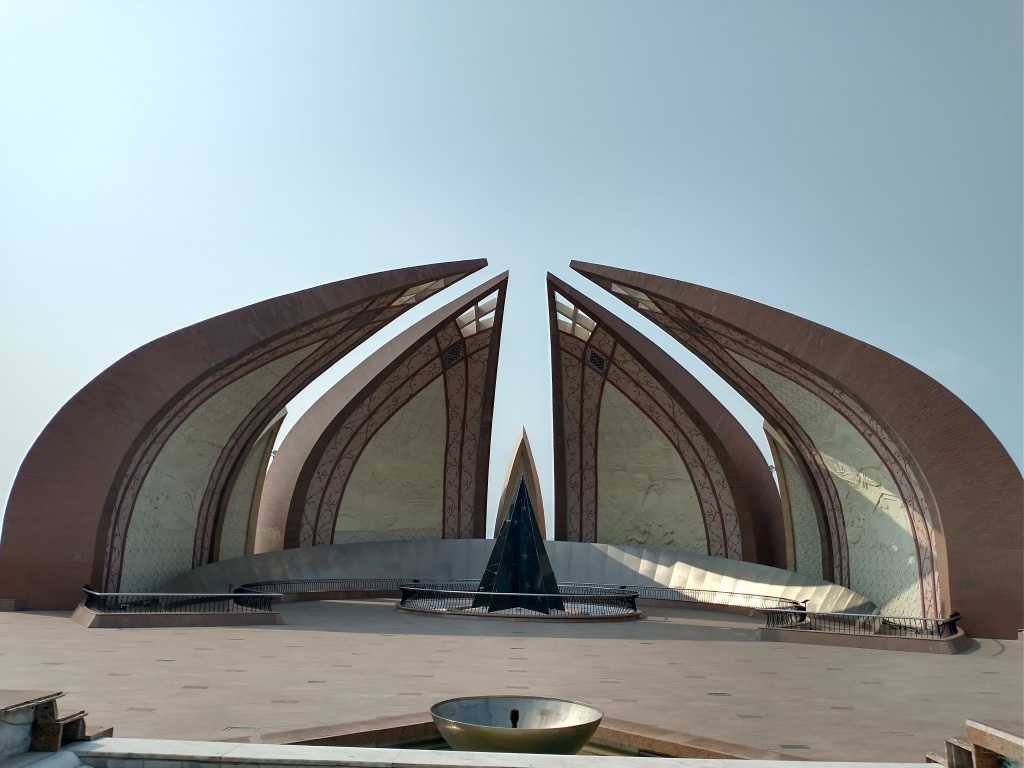
I’m headed home. After 3 months of weaving my way across Morocco, Algeria, Tunisia, Ethiopia, and Pakistan, I’m returning to the U.S., carrying glimpses of a new reality I’d previously failed to comprehend. I’m thrilled to see my family, my partner, and my friends. But I’m tangled up in the knots of purpose and place, knowing somewhere deep inside my veins, my blood pumps best when I’ve taken to the road. It’s who I am; it’s what I’m made to do.
I have much to write about regarding Ethiopia and Pakistan, but like a child first learning to read, I’m still sounding out chunks of cultural complexity that will take some time to decode. Even after countless hours of tutoring by local contacts and friends, grasping the political and cultural framework of these two nations requires a depth of nuance I’ve yet to grasp. This journey has been my own personal Rosetta stone, interpreting perceptions against reality, and while I’ve bridged some gaps in my understanding, truly comprehending the state of affairs in each country has been like trying to backstroke through a pit of quicksand.
Both nations are battling their own forms of tribal conflicts, religious sectarianism, geopolitical instability, the horror show of overt hegemonic influence, economic despair, and political volatility. These maladies tug at the feeble threads holding each country together, and while they both possess centers of stability and a measured hope for the future, what happens next is anyone’s guess.
Why lump these two nations together in one piece? Local sources in both countries have shared that their respective states are currently facing their most significant moments of turbulence in modern history. More than once, I was told, “You are visiting at the most unstable time in several decades.” Allow me to qualify the term “unstable” for our purposes. Pakistan in the mid-2000s saw incredible amounts of violence, well beyond what’s presently happening in the country. Suicide bombings, assassinations—all common occurrences. But today, political upheaval has lit a fuse that may explode at any moment. Inflation is nearing 100% from the year prior. A mass exodus of the country’s middle class was explained tersely to me with the following:
“People are getting the fuck out of here.”
Ethiopia’s recent civil war between the Tigrayan People’s Liberation Front (TPLF) and the Ethiopian National Defense Force (ENDF) was a bloody two-year battle, marring the national psyche with heinous atrocities on both sides. Yet for many, it was still less concerning than the present FANO uprising taking place in northern sections of the country. I spent 15 days in Addis Ababa, unable to leave the city, as every local with whom I spoke noted that it was too dangerous to travel beyond the capital by road. And the places I’d hoped to fly to were in the midst of an uprising, replete with police assassinations and kidnappings in the Amarah region. Pakistan, having recently deposed and imprisoned their former president, Imran Khan—who enjoyed an approval rating of approximately 80%—has now indicted him on hundreds of alleged corruption charges. This has plunged the nation into economic despair and stoked contempt for the military’s seizing power once again. The country’s generals have had a strong history of staging juntas since the 1950s with the purpose of realigning national interests. Pakistanis often share that in their 75 years of political independence, not one president has ever managed to complete their term. Coups, assassinations, votes of no confidence, corruption, international meddling—these are the status quo expectations of their established political system. And we thought we had it bad.
America, too, is in the midst of a spiritual quandary. From my perch, I see an improbable political reconciliation between a divided nation, and I live with the slippery hope that we can cling to the greased-up watermelon of democracy while we continue to tread water. Fortunately, and somewhat surprisingly, our institutions have managed to bear weight under the strain of division. In Ethiopia and Pakistan, the knees of each nation have countlessly buckled, leaving battle-weary citizens to pick themselves up, dust off their jackets, and take plodding steps forward.
What do I do with this information as I slide back into the world of routines, office work, grocery shopping, and chores? First, I count my metaphorical blessings. After what I’ve seen and heard, it’s clear that my life is comparatively abundant in its fortunes, and I shouldn’t take that for granted. I am lucky—the 1% of humanity—with options, pathways, and resources. Do I simply stick my head in the sand and ignore those foreign realities? Do I treat them as their problems to deal with and sidestep paying attention to the issues? Of course not. The people I’ve met throughout this journey are simply too important to me to be forgotten. They too have joined the ranks of friends like those in Palestine, Iran, or Colombia, with their faces humanizing every news story I read about Ethiopia or Pakistan. How are my friends in Ethiopia affected when a calamity strikes? And what’s happening with Usama and his team in Islamabad while political chaos ensues? What about the guys in Algeria? Or my friends in Morocco?
I’m admittedly mediocre in many areas of my life, and some may argue that I’m pretty damn poor in other respects. But travel has taught me the difference between being a spectator and being an observer. A spectator sits in the stands and enjoys the entertainment. An observer pulls out their notebook and studies the game as it happens. Travel has helped me become an observer by teaching me empathy, vulnerability, and how to listen with care. It’s taken 20 years, but I’ve learned to shift my time on the road from collecting personal experiences like they were baseball cards to connecting with people because they matter just as much as I do. I’ve learned to sit and carefully hear their words rather than simply waiting for my turn to talk. This type of connection, this type of travel, is the one area I finally feel a touch above average.
What began as a project to write about culture—funneled through the eyes of local jiu-jitsu players—morphed into full-scale friendships forged in the fires of training and honest discussions. These people are so much more than simple characters in a travelogue. They housed me, fed me, and took the food from their own damn mouths to stuff it in mine. They tossed their schedules to the side, ignoring their own families, all for the sake of looking after my project with some vested interest. I learned patience, humility, hospitality, and resilience through them. I walked out into the world searching for lessons and found a host of teachers poised to share their wisdom. Three years of learning smashed into three months of travel has rocked me to the core. I’m no longer the same man I was in late June of this year. I’ve changed, I hope for the better, and there’s no going back.
So what do I do now that I’m heading home? First, I’ll kiss my mother, my grandmother, my sisters and my girlfriend. I’ll grab my father in a warm embrace. I’ll celebrate the marriage of my best friend at his approaching wedding. I’ll mourn the passing of our dog. I’ll eat a fresh salad. Then, when the excitement dies down and normal life floods my days, I’ll meditate on the kindness I’ve received over the last three months. I’ll study the idiosyncrasies of Ethiopia and Pakistan, and I’ll work to arrange cogent thoughts to share here with you.
I’m a traveler, and part of being on the road is stepping off it. Despite the fire in my guts to sell everything I own and push to the far reaches of the earth until the money runs out, it’s time to step back and explore the beauty of my home, my community, and my people.
For now, my family awaits, my girlfriend awaits, and my salad awaits.


 Stirring Point
Leave a comment