
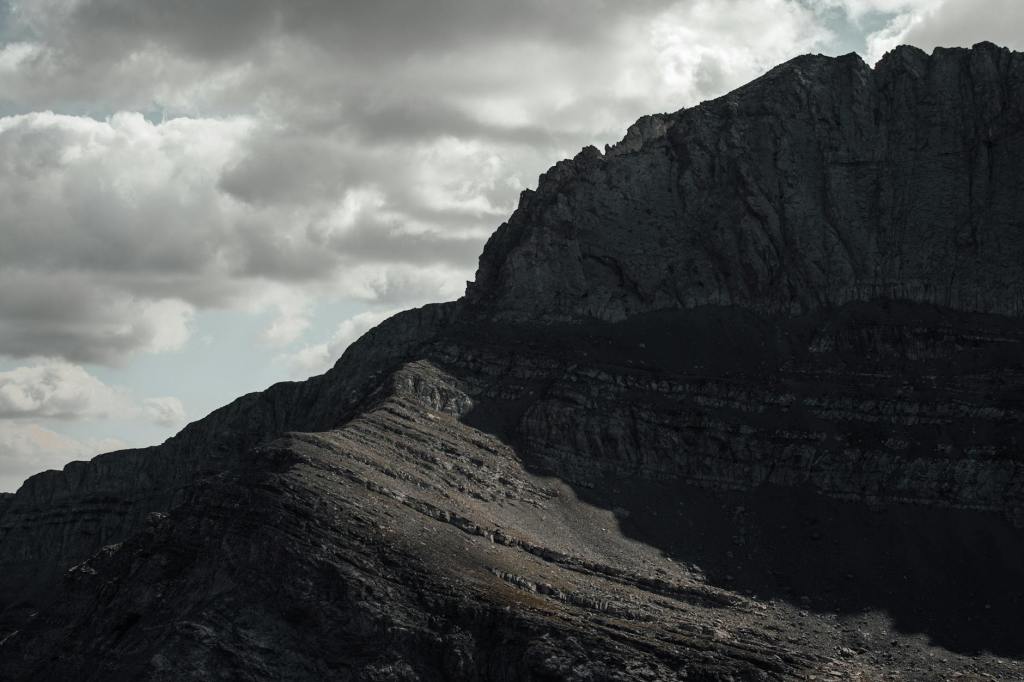
“Myths are the stories we tell ourselves to make living tolerable. To make shitty lives seem worth enduring. The gods lived on Olympus, a climbable mountain within plain sight.”
– Kaveh Akbar, from his novel Martyr!
On Thanksgiving Day, 2003, I climbed Mt. Olympus while studying abroad in Greece. A friend and I set out the day prior, camping halfway up the mountain, before making a final push the next day for its ramp-like peak. Snow coated the trail and made the last two hundred yards an icy mess, keeping the top just beyond our reach. Seeing the peak, though, was easy business from where we stood. And to Kaveh Akbar’s point above, Olympus is not K2. For most people in good health, it’s a climbable mountain with a steady approach, especially with today’s moisture-wicking gear and GORE-TEX boots.
So how was it possible to convince all of Greece that divine figures ruled over their dominion from such a visible perch? 2500 years ago, an able-bodied Greek could easily crest the final ridge and see nothing but the facts of nature before them. This begs the question:
What would motivate people to so willingly deposit their belief at the foot of an otherwise unreasonable idea?
Here are a few obvious answers:
- Appeal to authority: Most people base their faith on the words of others. A trusted source, a parent, a seer, or a holy man—anyone with a lick of confidence and a smidge of authority sounds compelling.
- Rumors and fear go hand in hand. The fear of testing a rumor and being proven wrong comes with stakes. To the Greeks, it’s possible that approaching the mountain was met with retribution from the “gods.” Rumors, like fire, grow with air. Rumors about vengeful gods spread like wildfire.
- The “god of the gaps” concept: This suggests that gaps in scientific knowledge are evidence of God’s existence and intervention. Simply put, we attribute to the gods what we can’t explain.
Example: Lightning scares us, and because we’ve yet to explain its origins, we attribute meaning to the occurrence. It comes from a place beyond human measure and, therefore, must come from an all-powerful being. In some way, we’ve displeased the gods, so they punish us with terror and threaten us with their wrath.
Number 3 digs to a deeper point. If we’re being punished for our insolence, we can also be rewarded for our loyalty. Punishment and reward are results of “action,” and “action” is within our control. Having a sense of control allows us to attribute meaning to an occurrence rather than facing something random and uncontrollable. Extracting meaning from randomness (or the indifference of nature) feels unnatural and leaves the human mind wanting. “Why is this happening to me?” or “What have we done to deserve this?” are questions we ask ourselves in the face of unexplained hardships.
Myths offer us a look into the minds of our ancestors and often do so using the rich cultural heritage of a community. Fables carry morals and lessons, and periodically, myths will include these as well. But myths focus on explaining natural or social phenomena, and like the narratives we craft, modern myths take root as if they’re given truths. The myth of political figures, nationalism, ideology, religion—these are all attempts to bring greater meaning to our world by giving us something to believe in.
Belief, along with our time and health, is a precious currency. It’s imperative that we spend it wisely. And like our ancestors, we still lean into the appeal to authority, the rumor mills fanned by fear, and searching for external salvation for the things we fail to understand. But the myths of personal belief in party, religion, or character are one’s we should poke for weak spots. The entities that aim to sway our beliefs are often the architects of the myths themselves, and that should make skeptics of us all.



 Stirring Point
Leave a comment