
There’s an odd dichotomy that exists for many travelers and it often manifests as a type of illusion. The more one travels, the smaller the world becomes. Patterns emerge in human behavior, making distant cultures feel less like foreign enigmas. Landscapes group themselves with other landscapes; bucolic pastures have the same rural lull from England to New Zealand; deserts dry the tongue, from the Gobi to the Atacama. Yet the wideness of the world stays beyond the reach of the traveler’s arms, and the differences in the details are an unending well of texture and flavor. The world is covered in unique fingerprints, no matter how similar some of them may appear to be.
Often, the traveler asks himself, “How in the hell did I get here?” Sometimes there’s an obvious answer: a suggestion from a friend is common, or a city that’s used as the setting for a new mind-bending novel may spark some interest. Other times, maybe it’s a game of spinning the ol’ globe and seeing where the finger lands. Or, like a side dish on a menu, we chose a destination to complement another country that serves as our main entree for our travels.
Riga was a side dish meant to fill some time between Estonia and Lithuania. Chock it up to my ignorance. Maybe I’ll get there someday, I thought. Latvia is not something that comes up much in state-side conversations. Boston, New York, and Washington, D.C., are home to the bulk of the 80,000 Latvian Americans living in the U.S., and I’m not sure I’ve ever met one of them. With no pull to the country, it morphed overtime into a “can-kicker” destination that I’d likely see at some point. Someday, someday, someday.
After a 4-hour bus ride from Tallinn, Riga finally peeked its eyes through the passing pine forests and watched our bus as we approached. The forest gave way to the suburbs, where a tangle of greenways and big-box stores filled the roadside. Soviet-era tenement buildings flaked gray paint from their worn, concrete facades. It felt like the less romantic parts of Kosovo, Albania and Montenegro—places where life, not so long ago, was very hard.
The bus station was a squat building with cheap but modern fixtures resting along the banks of the Daugava River. Across the river, we caught our first local glimpse of idyllic Europe. Fresh produce stacked neatly in a nearby open-air market gave us hope for an interesting few days. Customers and vendors buzzed like bees around the hive and pumped with a city pulse. We grabbed our luggage and hoofed it by tunnel under the busy intersection above. Bakeries and shoeshines filled the stalls of the tunnel, where old women peddled fresh bread and croissants. As we walked by, I thought about their lives below: absent from the day’s sun and starved for Vitamin D.
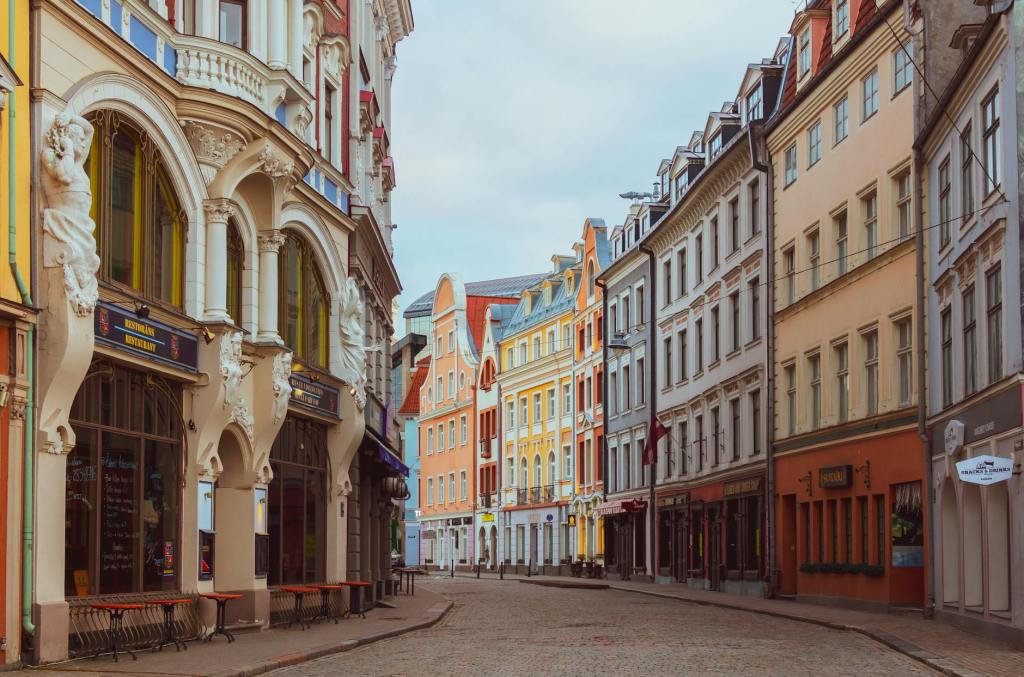
Emerging from the tunnel is when the mood began to shift. One turn of a corner and the cobblestones rolled out like a red carpet before us. Old Town. Centuries of architecture were stacked on top of each other and decorated with vibrant colors. The streets moved from black and white to technicolor, like a scene in The Wizard of Oz. And that’s when Riga caught me off-guard, like a well-placed left hook. Exceptional coffee and doughy pastries fill windows on every block. Clean streets and green spaces are abundant. Patios filled with bistro tables overflow during happy hour. The world’s finest garlic bread? You’re damn skippy—and served in a basement pub with thick slabs of salty bacon on the side.
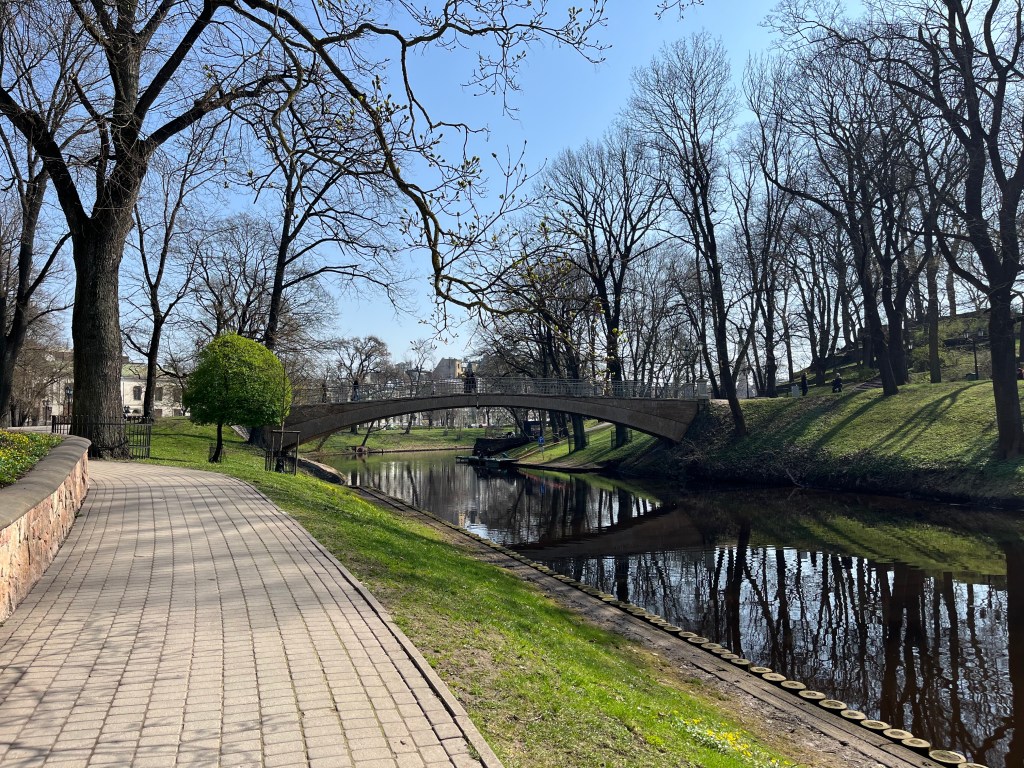
The Old Town steps into the sunlight and begs to be seen. The Daugava River splits the city, spilling small canals through prominent neighborhoods. Like water in the forest, the canals breathe life into the earth, bringing nature to the urban doorstep. Grassy banks offer soft landings for students to relax between classes. Statues and flowers turn a casual stroll into a sightseeing experience. Lovers, friends, cyclists and buskers all flock to the riverfront to feel the warmth of a promising day.
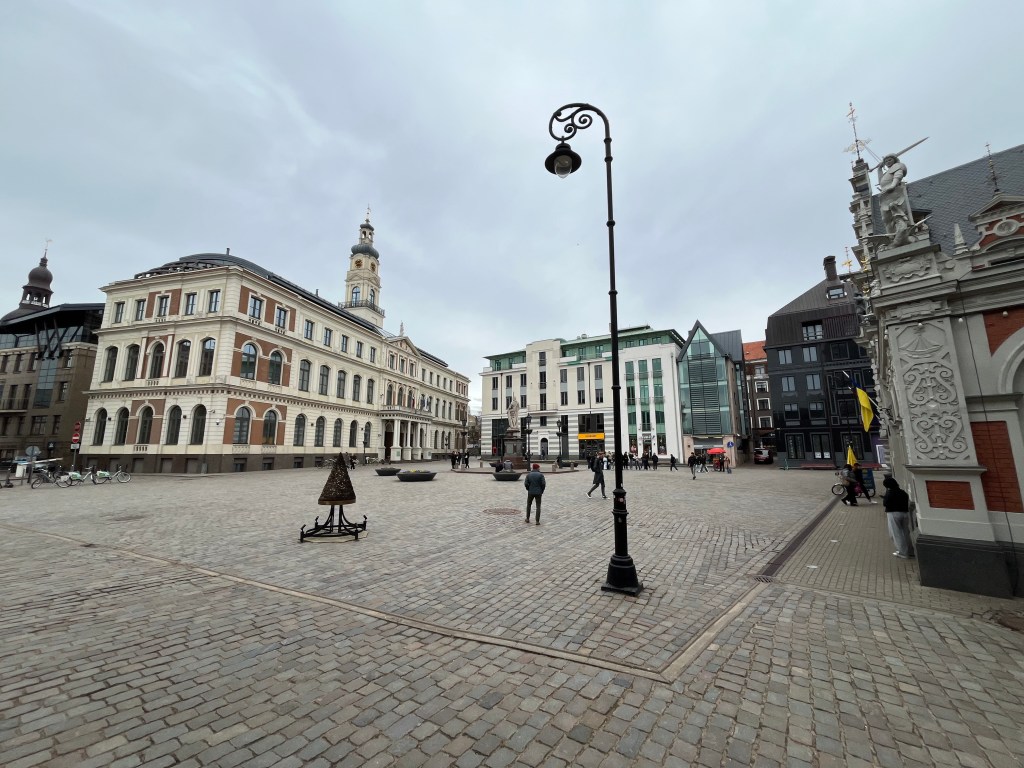
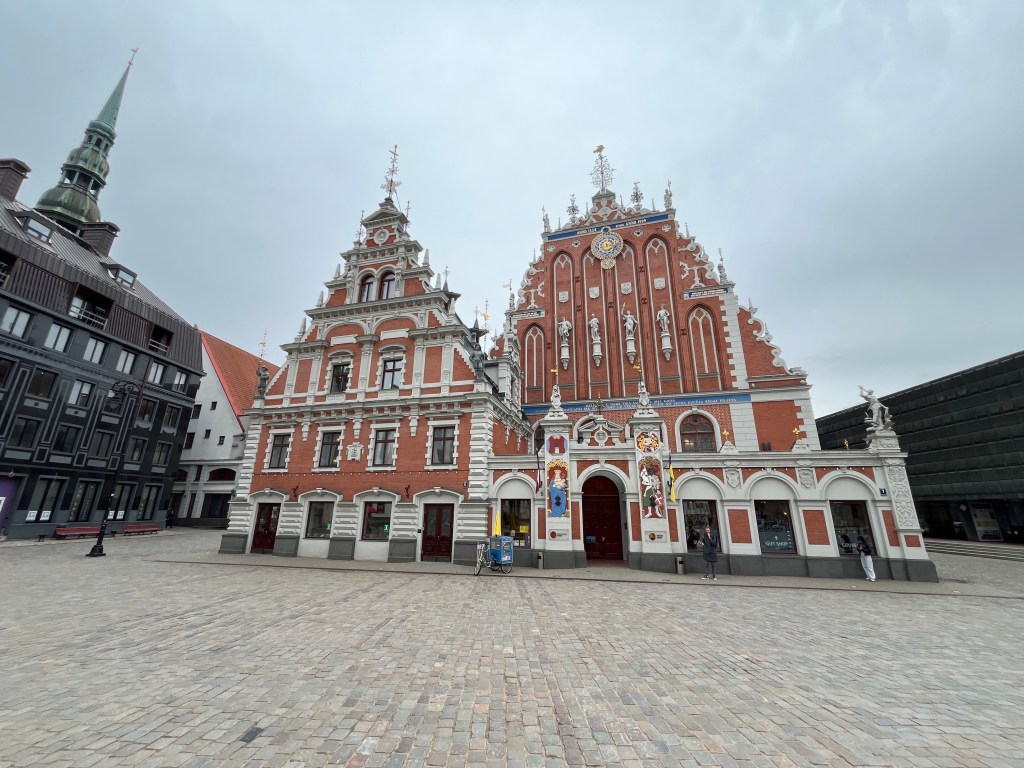
The architecture stuns from the Latvian National Opera House to the Art Nouveau district. The buildings seem to take flight in Old Town, soaring with a sense of triumphant glory. Whether they survived World War II or were reconstructed after the war, Latvia looks to its past in order to claim its future. The House of the Blackheads is a marvelous reconstruction. St. Peter’s Cathedral is planetary in size and commands the orbit around its grounds. The Freedom Monument, while slight in stature compared to other symbols of freedom around the world, stands strong and proud and exudes a sense of national unity. Unlike Tallinn, the Old Town doesn’t feel like an open-air museum. Riga’s Old Town is functional, pragmatic, and filled with anchors for daily living. There are souvenir shops and tourist infrastructure, but these places blend in well with restaurants, cafes and record stores.
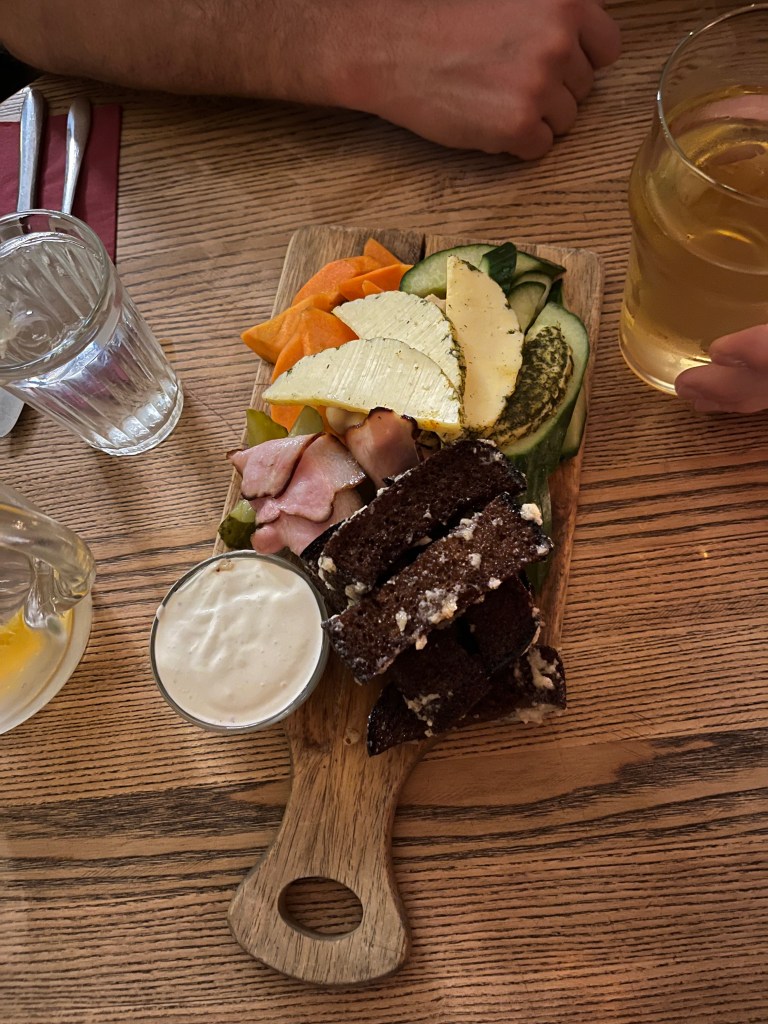
We slurped Georgian stew; we gobbled doner kebabs. We ate “Grandma’s Meatballs” and bacon-wrapped chicken livers. And with each meal, we slugged semi-dry cider and counted our fortunes.
Riga is not Paris, nor is it Barcelona. But for 4 days, it captured every bit of my attention with its demur grandeur. And like a side dish that outshines the entree, it’s something I want everyone I know to try.


 Stirring Point
Leave a comment