
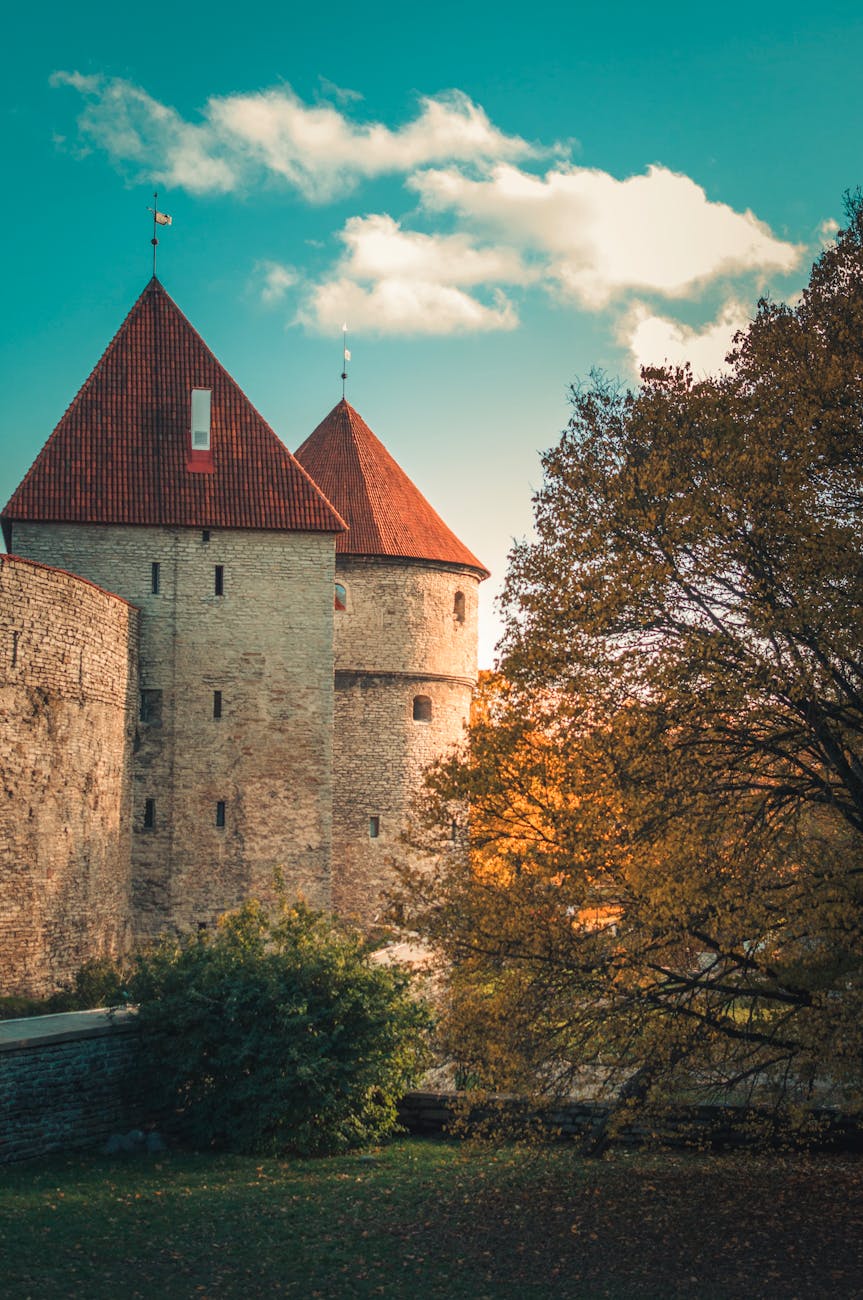
Tallinn, you magnificent bastard! Your streets transport me back to my early days in Europe, when, as a 20-year-old, the alleyways of Brugge and Bordeaux gobbled me up. Your facades and turrets cast medieval shadows similar to those in Prague and Dubrovnik. And your stone cellars, with their crumbling archways, lead into your bowels like Parisian catacombs. Your beauty is disorienting, and, dammit, you know it.
Some refer to you as a day trip—an easy 2-hour ferry across the Baltic Sea from Helsinki. These people are fools to call you such names, especially if they are first-timers to your streets. You’re not a box to be checked or a city to be collected in a day’s time. You’re the past and the future, residing in harmony, and you need some time to tell your story.
The ferry from Helsinki feels like a tired old casino, but the coffee is hot and a live band plays the classics. The first impression of your port reads how most ports do: functional and busy, but ugly to the bricks. Modern buildings hug the edge of your waters in a tangled knot of glass and steel. Yet a few steps beyond these structures, we catch our first glimpse of your ancient walls—pocked-marked with time and caked with history.
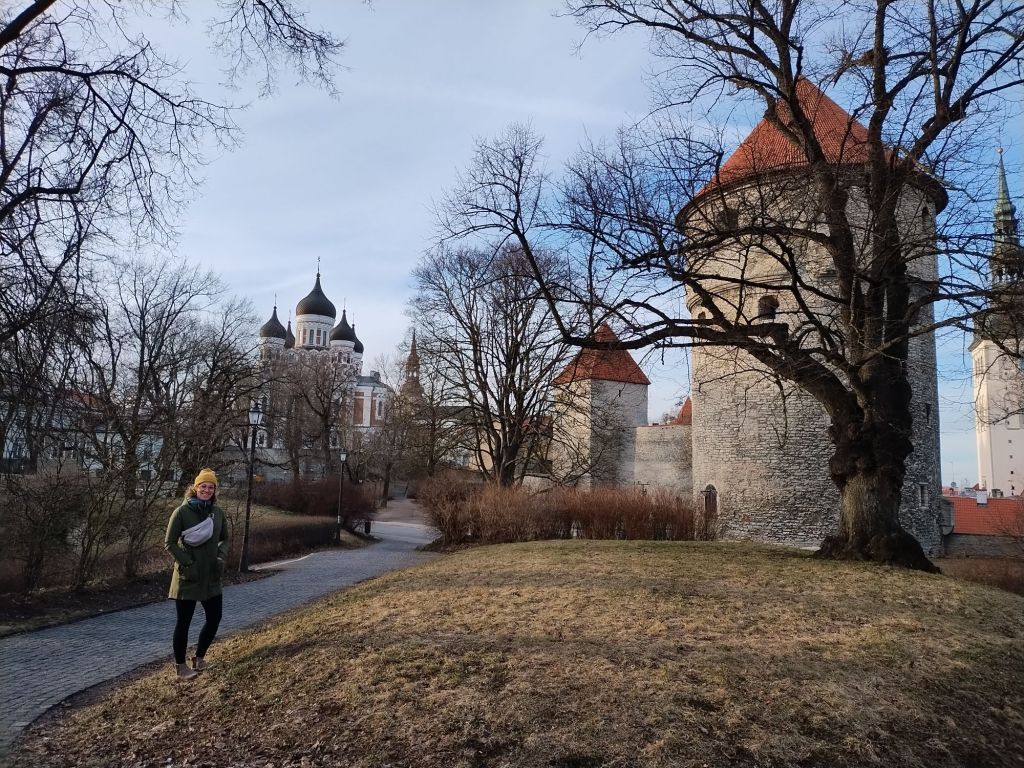
The gates to your old city feel like a portal to another century. Your streets flood the imagination with 700 years of echoes: clacking hooves from northern horses slapping along the cobblestones; the clunk of wooden tires under the drawn carts that followed. Traders and merchants filled these corridors with bustling commerce. Artists and artisans packed them with color. Fused together, a unique vibration was born, and it hovers around your storied streets to this day. But for a time, the Soviets came and sucked all sound from the air, leaving only their ominous tones of occupation.
As a city, you are a basket of Easter eggs, volleying pastel facades from one building to the next. Your streets weave and wander as if they’re unsure of where they themselves will end. They thread around bends and through historic archways, depositing pedestrians into remarkable public squares. Cafes snatch them up with the promise of flaky pastries and fresh espresso.
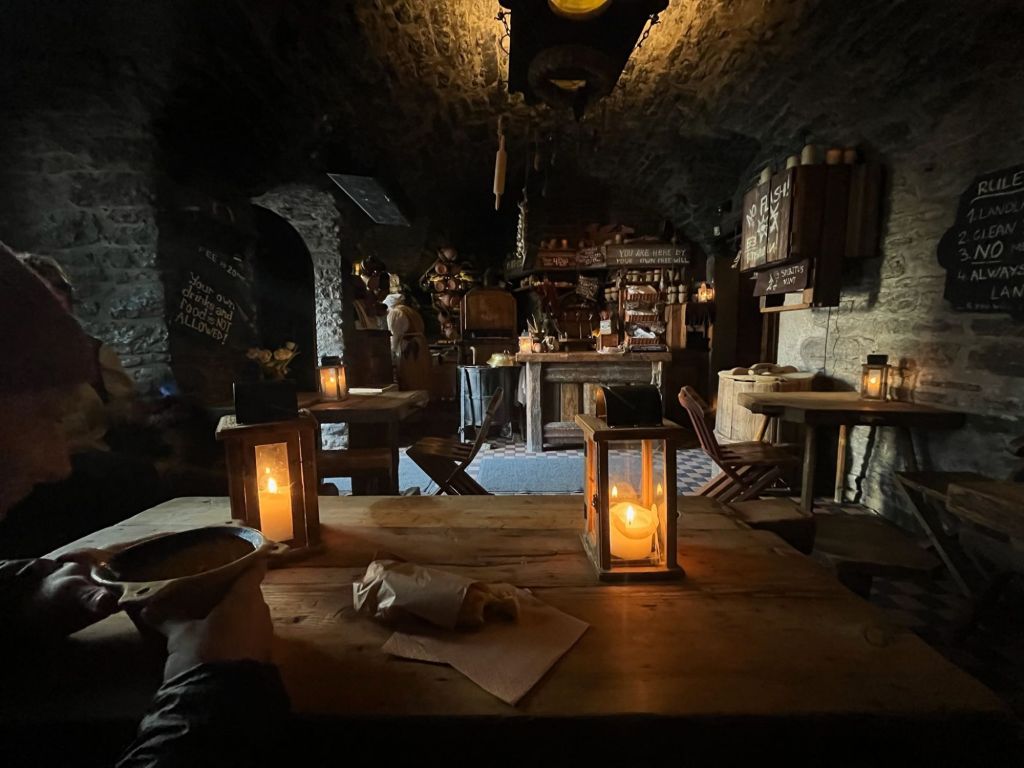
You have more souvenir shops than I care for, and in the old city, this seems to be your greatest crime. Otherwise, your museums, artisan shops and cathedrals are a traveler’s dream. You line your streets with fragrant flower markets. You serve well-frothed cappuccinos in 400-year-old stone cellars. III Draakon offers bowls of elk stew ladled from old wooden barrels. The maid behind the counter pours steins of local cider that are crisp and strong, and she insults her customers while doing so. The tables, the walls—it all feels like a scene from Game of Thrones. But the building is 700 years old, so we lean into your heritage with you. Yes, there’s a thin veil of artifice. So be it. We’re happy to be swept up in your story, and we’re glad to be romanced by your charm.

You host hundreds of cafes, many of which have historic overtones. We sip creamy cappuccinos at Cafe Maiasmokk while taking in the elegant woodwork along the walls. This is your oldest functioning cafe, and like the best ones through history, it’s a salon to parse ideas. One can envision prior generations coming before these hallowed walls to discuss the matters of the day. Now, patrons snack on rich, handmade truffles that rest under glass like artifacts in a museum. And while they lick their fingers, they stare from the windows and across the street at the Russian embassy. It’s here that we recognize how close you are to her orbit. From my own chair, I sip my coffee and scan a handful of “Fuck Putin” signs left outside the building by pro-Ukrainian protestors. For a moment, the pixie dust wears off and I come crashing back to earth. There’s a war going on nearby and it’s too close to bury in the back pages of The Times. Russia is on the hunt, and you were under her heavy thumb for too long; there’s no ignoring the implications. The nearby KGB prison museum helps us understand some of the atrocities that happened to your people during her reign. If I were one of Tallinn’s sons, how would this situation make me feel?
We leave the walls of your old city behind and head to Balti Jaam Market, a food hall filled with fresh produce, meats and cheeses, as well as several small restaurants. Fresh-baked black bread lines the walls of local bakeries, while olives soak in buckets of seasoned brine. We snack on black dumplings, filled with chicken and shrimp, and slurp borscht soup with thin slices of rye on the side. Piping-hot spoonfuls feel like a sweater for the inside, and we hope that somehow the bowl is neverending.
Your neighborhood of Kalamaja stands just beyond Balti Jaam Market, and here, your hipsters carve out new trends in repurposed buildings and industrial spaces. From converted cargo containers to restaurants built in train cars, you’re home to Europe’s “digerati.” You gave the world Skype, Bolt (an app like Uber) and several other successful digital platforms. And from third-wave coffee shops to avant-garde food displays, you’ve fetishized the artisan movement into a form of new pornography. Instead of curvy hips and a trim waistline, cardamom pastries and creamy lattes are today’s lip-smacking smut. Storefronts in Kalamaja, filled with focaccia loaves and French boules, turn even church ladies into full-on flavor pervs. Believe us: your flavors are devine and no one is complaining.
Fika Cafe functions like a mother ship for all that is cool in Kalamaja. Part cafe, part public gathering space—it shares the market with ceramic artists, a shop for handmade coats and bags, and an indoor play space for children where parents can sip wine and buy bread, sold by way of the honor system. Take a loaf—leave 5 euros. Social deviants have brothels and strip clubs. The rest of us have cortados and “artist collectives.”
As night falls, music leaks from the doors of nearby bars and clubs. House music and heavy metal collide mid-air, creating a chaotic melange of Baltic mania. 20 years ago, I’d taste every flavor you had to offer. I’d push the night into the morning, stealing happiness from tomorrow for the pleasure of today. But not these days, Tallinn. I’m slowing down. I want a clear mind for tomorrow’s walk. I want to see you through wide, curious eyes. The clock is ticking and I don’t want to waste a moment.


 Stirring Point
Leave a comment